Source Cast Iron Elevator Guide Wheel for Apartments, Projects, and Construction
Find 30 listings for Cast Iron Elevator Guide Wheel components with options for roller or ball bearings. Buyers can compare specifications like weight, hardness, and certification standards from suppliers in China.
Key considerations
Products List
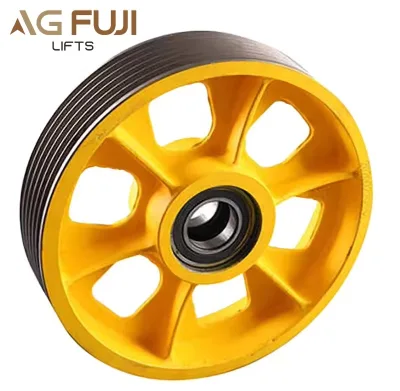


OEM High Quality Elevator Pulley Wheel with CNC Machining in Steel/Iron Casting
$19.00 - $20.00
MOQ: 100 Pieces


Comprehensive Sourcing Guide
Strategic Sourcing Guide for Cast Iron Elevator Guide Wheels
Understanding the Technical Profile of Cast Iron Guide Wheels
When sourcing cast iron elevator guide wheels, buyers must first establish a clear understanding of the specific material properties and mechanical configurations that define this component. The core material for these wheels is consistently identified as cast iron, with specific variations including grey iron and ductile iron. These materials are selected for their ability to provide the necessary hardness and wear resistance required in elevator guide rail systems. The observed hardness for these components is recorded at 93A, a metric that indicates a specific level of durability suitable for the friction and load conditions found in elevator shafts.
The manufacturing process is equally critical to the final product's integrity. The supplied data indicates that sand casting is the primary method employed for these components. This casting technique allows for the creation of complex geometries and is particularly effective for iron-based alloys. The casting form usage is noted as permanent, suggesting that the molds are designed for repeated production cycles rather than single-use patterns, which can influence the consistency of the final casting dimensions. The resulting products are often categorized as elevator parts, specifically designed to function as guide wheels that support the car and counterweight along the guide rails.
Mechanical specifications vary based on the intended application and load requirements. The bearing types associated with these wheels include both roller bearings and ball bearings. The selection between these two types depends on the specific load dynamics and speed requirements of the elevator system. For heavy-duty applications, roller bearings are often preferred due to their higher load capacity, while ball bearings may be utilized in systems requiring smoother, lower-friction rotation at varying speeds. The load capacity for these systems is observed to range between 500 and 1000 kilograms, a critical parameter for ensuring the safety and stability of the elevator car during operation.
Dimensional specifications are highly customizable to meet the unique requirements of different elevator models. Standard dimensions observed in the market include configurations such as 42, 52, 62, and 82, as well as specific model numbers like 18050. The standard designation C18050 further illustrates the precision required in these parts. Buyers should note that dimensions can also be provided "as per your demand," indicating a high degree of flexibility in the manufacturing process. The weight of individual units can vary significantly, ranging from 0.5 kilograms to 100 kilograms, depending on the size and density of the cast iron used.
Compliance and Certification Verification
In the B2B procurement of elevator components, verifying compliance with international and regional standards is non-negotiable. The safety of elevator operations relies heavily on the quality of the guide wheels, making certification a primary filter for supplier selection. The most prominent certification observed in the context of these products is ISO 9001. This standard ensures that the manufacturer has established a quality management system capable of consistently producing products that meet customer and regulatory requirements. Specific references to ISO 9001:2008 indicate that some suppliers may adhere to this specific version of the standard, though buyers should verify if newer iterations have been adopted.
Beyond quality management systems, product-specific certifications are essential. The CE mark is a critical certification for products intended for the European market, signifying that the product meets EU safety, health, and environmental protection requirements. While the presence of the CE mark is a positive indicator, buyers must ensure that the certification is valid and applicable to the specific type of elevator part being purchased. It is also important to note that while industry standards such as EN 81 and EN81 are often associated with elevator safety, the specific application of these standards to the guide wheel itself must be confirmed with the supplier.
Buyers should approach certification claims with a verification mindset. The presence of a certificate does not automatically guarantee that every unit in a production run meets the standard. Therefore, the procurement strategy should include a request for valid, up-to-date certification documents directly from the manufacturer. The supplier should be able to provide proof of their ISO 9001 status and CE certification, along with any other relevant documentation that validates the material composition and mechanical properties of the cast iron used. This due diligence helps mitigate the risk of purchasing substandard components that could compromise elevator safety.
Cost Drivers and Pricing Dynamics
The pricing of cast iron elevator guide wheels is influenced by a complex interplay of factors, including material costs, manufacturing complexity, and order volume. The observed price range for these products is extensive, spanning from 0.99 USD to 9999 USD. This wide variance is not indicative of a single product line but rather reflects the diversity of the market, which includes small, lightweight components alongside large, heavy-duty industrial parts. The price is directly correlated with the weight and dimensions of the wheel; for instance, a unit weighing 100 kilograms will naturally command a higher price than one weighing 0.5 kilograms.
Material costs play a significant role in the final price. The use of grey iron versus ductile iron can affect the cost, as ductile iron often offers superior mechanical properties and may command a premium. Additionally, the casting method, specifically sand casting, involves costs related to mold creation and the energy required for melting and pouring the metal. The hardness of the material, observed at 93A, also influences the cost, as achieving specific hardness levels may require additional heat treatment processes or alloying elements.
Order volume is another critical cost driver. The Minimum Order Quantity (MOQ) for these products ranges from 1 piece to 20,000 pieces. Buyers purchasing small quantities, such as single items or small batches, may face higher unit costs due to the fixed costs of setup and production. Conversely, bulk orders can leverage economies of scale to reduce the per-unit price. The selling units are typically listed as "single item," which suggests that the market is flexible enough to accommodate both small repair orders and large installation projects.
Packaging and logistics also contribute to the overall cost. The observed packing methods include paper boxes, wooden boxes, and plywood cases. For heavy components, such as those weighing up to 100 kilograms, robust packaging like plywood cases is necessary to prevent damage during transit. These packaging materials add to the cost, particularly for international shipments where freight charges are significant. Buyers should consider the total landed cost, including packaging, when evaluating the price competitiveness of a supplier.
Typical Applications and Operational Context
Cast iron elevator guide wheels are primarily designed for use in residential and commercial buildings, with a specific application noted for apartments. The design style of these components is modern, reflecting the aesthetic and functional requirements of contemporary elevator systems. The versatility of these parts allows them to be integrated into various elevator types, provided the mechanical specifications align with the system's requirements.
The operational context of these wheels involves continuous running operation, which demands high reliability and durability. The drive type is typically gear drive, which provides the necessary torque and control for the elevator's movement. The traction type is identified as traction, indicating that the wheels work in conjunction with the traction system to move the elevator car and counterweight. This setup is common in modern elevator designs where precise control and smooth operation are paramount.
In addition to standard elevator applications, the versatility of cast iron components extends to other machinery. Some data suggests that similar casting methods and materials are used in agricultural machinery, such as dry cultivating machinery with horizontal axis arbor configurations. While this does not mean the elevator guide wheels are used in agriculture, it highlights the broad applicability of the manufacturing capabilities of the suppliers. The ability to produce parts for diverse sectors, including forestry, fisheries, livestock, aquaculture, and agriculture, indicates a robust supply chain capable of handling various casting requirements.
For elevator applications, the guide wheels must operate reliably in environments that may experience varying temperatures and humidity levels. The cast iron material provides the necessary resistance to wear and tear, ensuring long-term performance. The customization options available allow suppliers to tailor the wheels to specific elevator models, ensuring a perfect fit and optimal performance. This flexibility is crucial for maintaining the safety and efficiency of elevator systems in different building types.
Supplier Evaluation and Geographic Considerations
Evaluating suppliers for cast iron elevator guide wheels requires a thorough assessment of their capabilities, location, and service offerings. The primary production locations identified are Shaanxi, China, and Shandong, China. These regions are known for their manufacturing infrastructure and expertise in metal casting. Buyers should verify the specific origin of the product, as the location can impact lead times, shipping costs, and the supplier's familiarity with international trade regulations.
Supplier evaluation should also focus on the after-sales service provided. The observed service offerings include onsite installation and online technical support. These services are critical for ensuring that the installed guide wheels function correctly and that any issues are resolved promptly. Suppliers that offer comprehensive after-sales support demonstrate a commitment to customer satisfaction and product reliability.
The project solution capability is another key factor in supplier selection. Suppliers that provide a total solution for projects can offer more than just the product; they can assist with design, installation, and maintenance. This holistic approach can streamline the procurement process and reduce the risk of errors or delays. Additionally, the availability of customization is a significant advantage, allowing buyers to obtain parts that meet their specific requirements without compromising on quality.
When evaluating suppliers, buyers should also consider the sample availability. The observation of "cheap" samples suggests that suppliers may offer low-cost or free samples for evaluation purposes. This can be a valuable tool for buyers to assess the quality of the product before committing to a larger order. However, buyers should ensure that the samples are representative of the final product and that the supplier is transparent about the conditions of the sample provision.
Quality Control and Long-Term Procurement Strategy
Implementing a robust quality control strategy is essential for ensuring the reliability of cast iron elevator guide wheels. Buyers should establish clear quality criteria based on the observed specifications, such as the material composition (grey iron/ductile iron), hardness (93A), and dimensional accuracy. Regular inspections and testing should be conducted to verify that the products meet these standards. The use of certified manufacturing processes, such as sand casting with permanent molds, should be verified through documentation and on-site audits.
Long-term procurement considerations involve building a sustainable relationship with suppliers who can consistently deliver high-quality products. The warranty period of more than 5 years is a significant indicator of supplier confidence in their products. Buyers should ensure that the warranty terms are clearly defined and that the supplier is willing to honor them in case of defects or failures. This long-term support is crucial for minimizing downtime and maintenance costs in elevator systems.
The procurement strategy should also account for the potential for future customization and scalability. As elevator systems evolve, the requirements for guide wheels may change. Suppliers that offer customization and have the capacity to scale production can adapt to these changes more effectively. Buyers should maintain open communication with suppliers to stay informed about new technologies and materials that could enhance the performance of their elevator systems.
Finally, buyers should consider the environmental and safety implications of their procurement decisions. The use of cast iron and the associated manufacturing processes should align with sustainability goals and safety regulations. By selecting suppliers who prioritize quality, compliance, and service, buyers can ensure the long-term success and safety of their elevator projects.
FAQs
What materials are used for cast iron elevator guide wheels?
These wheels are primarily made from grey iron or ductile iron. The material selection ensures high hardness, observed at 93A, and durability for continuous running operation in elevator shafts.
Which certifications do manufacturers typically hold for these parts?
Manufacturers often hold ISO 9001 and ISO 9001:2008 certifications for quality management. Some products also carry CE certification to meet European safety and environmental protection requirements.
How can buyers customize the dimensions of these guide wheels?
Customization is available to meet specific project demands. Standard models include sizes like 4*2, 5*2, and 180*50, but dimensions can also be produced as per your specific requirements.
What is the minimum order quantity for purchasing these wheels?
The minimum order quantity ranges from 1 piece up to 20,000 pieces. This flexibility allows buyers to order single items for repairs or large batches for new installations.
Where are the main manufacturing locations for these elevator parts?
Production originates from regions in China, specifically Shaanxi and Shandong. These locations are known for their metal casting infrastructure and expertise in producing industrial elevator components.
What bearing types are used in these cast iron guide wheels?
The wheels utilize either roller bearings or ball bearings depending on the application. Roller bearings are often chosen for higher load capacities, while ball bearings suit smoother rotation needs.
Can suppliers provide onsite installation and technical support?
Yes, after-sale services include onsite installation and online technical support. Suppliers also offer total project solutions to assist with design and implementation for various building types.